

Wireless audio devices have become an essential part of everyday life. Whether you are listening to music, attending online meetings, watching movies, exercising, or traveling, having a comfortable audio device can make a big difference.
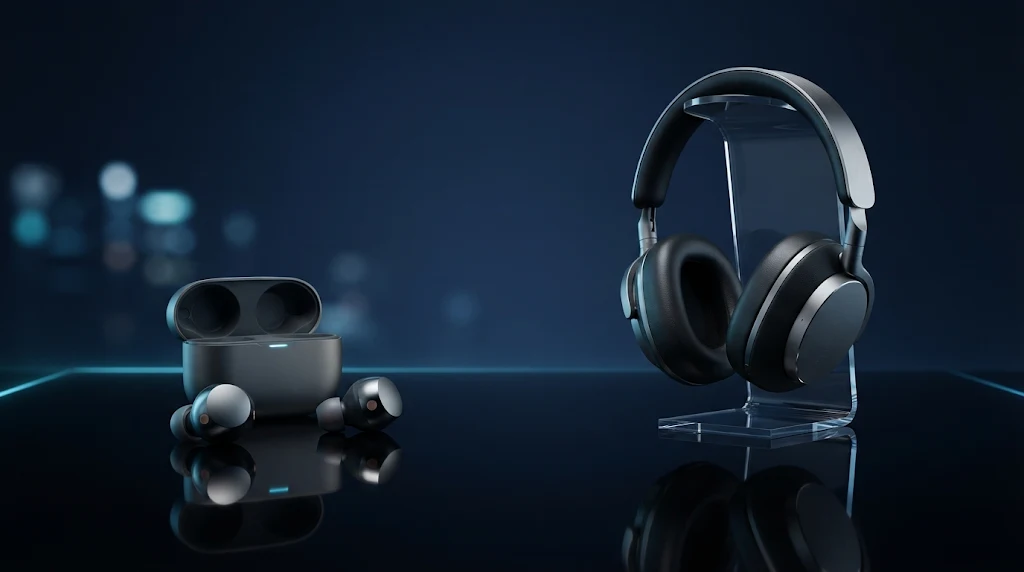
Two of the most popular choices are wireless earbuds and over-ear headphones. Both offer wireless connectivity and convenient listening experiences, but they are designed for different needs.
Wireless earbuds are compact, lightweight, and easy to carry. Headphones generally offer larger ear cups, longer listening comfort for some users, and more room for powerful audio drivers.
So, which one should you buy in 2026?
In this guide, we compare wireless earbuds and headphones based on sound quality, comfort, battery life, portability, noise cancellation, and price to help you make the right decision.
What Are Wireless Earbuds?
Wireless earbuds are small audio devices designed to fit inside or around your ears. Most modern models connect to smartphones, laptops, and tablets through Bluetooth.
Many earbuds come with a compact charging case that provides additional battery power when you are away from an electrical outlet.
Some advanced models include active noise cancellation, transparency mode, touch controls, water resistance, and built-in microphones.
Key Features of Wireless Earbuds:
- Compact and lightweight design
- Bluetooth connectivity
- Portable charging case
- Built-in microphones
- Touch or button controls
- Active noise cancellation on selected models
Wireless earbuds are especially popular among commuters, students, travelers, and fitness enthusiasts.
What Are Wireless Headphones?
Wireless headphones are audio devices that cover your ears or sit directly over them. Over-ear headphones generally have larger ear cups, while on-ear models rest directly on the ears.
Their larger design allows manufacturers to include bigger batteries, larger audio drivers, and more physical controls.
Many premium headphones offer advanced noise cancellation, customizable sound profiles, and comfortable padding for extended listening sessions.
Key Features of Wireless Headphones:
- Over-ear or on-ear designs
- Larger ear cups
- Bluetooth connectivity
- Larger battery capacity on many models
- Physical or touch controls
- Advanced audio features on selected models
Headphones are commonly used by professionals, gamers, music enthusiasts, and people who spend long periods listening to audio.
Wireless Earbuds vs Headphones: Quick Comparison
Here is a simple comparison of the two audio devices.
| Feature | Wireless Earbuds | Wireless Headphones |
|---|---|---|
| Design | Small and compact | Larger and bulkier |
| Portability | Excellent | Moderate |
| Battery Life | Usually shorter per charge | Often longer |
| Comfort | Depends on ear fit | Depends on headband and ear cups |
| Sound Quality | Good to excellent | Good to excellent |
| Noise Cancellation | Available on selected models | Available on selected models |
| Exercise | Generally more convenient | Often less convenient |
| Travel | Easy to carry | Requires more space |
| Controls | Touch or physical buttons | Physical or touch controls |
Neither category is automatically better. The right choice depends on how and where you plan to use your audio device.
1. Sound Quality: Which One Sounds Better?
Sound quality is one of the most important factors when choosing an audio device.
Wireless headphones often have larger drivers and more space for acoustic design. This can help manufacturers deliver a fuller sound, especially in the bass and lower frequencies.
However, modern wireless earbuds have improved significantly. Premium earbuds can provide detailed audio, balanced sound profiles, and impressive listening experiences.
The final sound quality depends on several factors:
- Audio driver quality
- Bluetooth audio codec support
- Sound tuning
- Fit and seal
- Audio source quality
- Active noise cancellation and equalizer settings
Winner: Headphones often have an advantage in physical driver size and sound presentation, but premium earbuds can also deliver excellent sound.
2. Comfort: Which Is Better for Long Listening Sessions?
Comfort depends heavily on personal preference.
Wireless earbuds sit inside or around the ear canal. Some people find them comfortable, while others experience pressure or discomfort after extended use.
Headphones distribute their weight across the headband and ear cups. Over-ear designs can be comfortable for long listening sessions, although they may feel warm or heavy over time.
When choosing earbuds, check whether different ear tip sizes are included. For headphones, consider headband pressure, ear cup padding, and overall weight.
Winner: Headphones may be more comfortable for some people during extended listening, but personal fit determines the real winner.
3. Battery Life: Which Lasts Longer?
Battery life is another major difference.
Wireless earbuds usually offer several hours of playback per charge. Their charging cases provide additional charges when the earbuds are stored.
Wireless headphones often have larger batteries and can provide longer continuous playback between charges.
Battery performance varies depending on volume, Bluetooth connection, active noise cancellation, and other features.
If you frequently travel or listen to music throughout the day, headphones may be more convenient because of their longer continuous playback.
Winner: Wireless headphones generally offer longer continuous listening time.
4. Portability: Which Is Easier to Carry?
Portability is where wireless earbuds have a clear advantage.
They are small enough to fit inside a pocket, handbag, or backpack. Their charging cases protect the earbuds and make them easy to carry.
Headphones are larger and may require a dedicated carrying case. Some models fold to reduce storage space, but they still take up more room than earbuds.
Winner: Wireless earbuds are the better option for portability.
5. Noise Cancellation: Which Blocks More Background Noise?
Active Noise Cancellation (ANC) uses microphones and electronic processing to reduce unwanted background sounds.
Both wireless earbuds and headphones can support ANC.
Over-ear headphones often benefit from passive isolation because their ear cups cover the ears. Premium earbuds can also provide strong noise cancellation when they create a proper seal inside the ears.
The actual performance depends on the product design, microphone quality, fit, and software processing.
If you frequently travel by airplane, train, or bus, compare independent noise-cancellation tests before buying.
Winner: Over-ear headphones often have an advantage in passive isolation, but premium earbuds can also perform very well.
6. Exercise and Outdoor Activities
Wireless earbuds are generally more convenient for running, walking, cycling, and gym workouts.
Their lightweight design makes them easier to carry, and selected models include water- and sweat-resistance ratings.
Headphones can feel bulky during exercise. They may also become uncomfortable when you sweat.
For outdoor activities, check the device’s official IP rating rather than assuming that it is water-resistant.
Winner: Wireless earbuds are usually the better choice for exercise and active lifestyles.
7. Price: Which Offers Better Value?
Both product categories include budget-friendly and premium options.
You can find affordable wireless earbuds for everyday listening, while premium earbuds may include advanced ANC, better microphones, and improved audio processing.
Headphones also come in a wide range of prices. Budget models can be suitable for casual listening, while premium products may offer better materials, sound customization, and noise cancellation.
Instead of choosing based only on price, compare the features you actually need.
Winner: It depends on your budget and requirements. Both categories offer good value at different price levels.
Best Wireless Earbuds and Headphones to Consider in 2026
Here are some popular product families worth researching before making a purchase.
Wireless Earbuds
1. Apple AirPods Pro
A popular option for users in Apple’s ecosystem, offering features such as active noise cancellation and transparency mode.
2. Sony WF-1000XM Series
Known for premium wireless audio features and noise cancellation.
3. Samsung Galaxy Buds Series
A convenient option for many Samsung Galaxy users, with ecosystem-focused features.
4. Google Pixel Buds Series
Designed to work closely with Google’s Pixel ecosystem and Android devices.
Wireless Headphones
1. Sony WH-1000X Series
A well-known premium headphone family with a focus on noise cancellation and travel-friendly listening.
2. Bose QuietComfort Series
Popular for comfort and noise-cancellation performance.
3. Apple AirPods Max
A premium over-ear headphone option designed for users who prefer Apple’s ecosystem.
4. Sennheiser Momentum Wireless Series
Worth considering for listeners who prioritize audio quality and premium headphone design.
Note: Product generations, prices, and availability change. Check the latest model specifications and local warranty before purchasing.
Which One Should You Buy?
The best option depends on your lifestyle.
Choose Wireless Earbuds If:
- You travel frequently and need a compact device.
- You enjoy running, walking, or going to the gym.
- You prefer a lightweight design.
- You want something easy to carry in your pocket.
- You mainly use your audio device with a smartphone.
Choose Wireless Headphones If:
- You listen to music for several hours.
- You prefer over-ear comfort.
- You want longer continuous battery life.
- You work or study in one location for extended periods.
- You want a larger headphone design for home or office use.
Final Thoughts
Wireless earbuds and headphones both offer excellent audio experiences, but they serve different purposes.
Wireless earbuds are ideal for portability, everyday convenience, and exercise. Wireless headphones are often a better choice for extended listening sessions, longer battery life, and people who prefer an over-ear design.
Before purchasing, consider your budget, listening habits, comfort preferences, and the features you actually need.
The best audio device is not necessarily the most expensive one. It is the one that fits naturally into your daily routine.
Frequently Asked Questions (FAQs)
1. Are wireless earbuds better than headphones?
Not necessarily. Earbuds are more portable and convenient for exercise, while headphones often offer longer battery life and an over-ear listening experience.
2. Which has better sound quality, earbuds or headphones?
It depends on the model. Headphones often have larger drivers, but premium earbuds can also provide excellent sound quality.
3. Are wireless headphones better for long listening sessions?
Many people find over-ear headphones comfortable for extended listening. However, fit, weight, padding, and personal preference matter.
4. Which is better for traveling?
Both can be useful. Earbuds are easier to carry, while noise-cancelling over-ear headphones may be preferable for long flights and journeys.
5. Are wireless earbuds good for gaming?
They can work for casual gaming, but Bluetooth latency and microphone performance may be limitations. Dedicated gaming headsets or low-latency wireless devices may be better for competitive gaming.
6. Do wireless headphones have longer battery life?
Many wireless headphones offer longer continuous playback because they have larger batteries. Actual battery life varies by model and usage.
7. Can I use wireless earbuds and headphones with a laptop?
Yes. Most Bluetooth earbuds and headphones can connect to compatible laptops, although microphone and audio quality may vary depending on the device and operating system.